In Forex trading, following signals can be an effective way to participate in the market without creating every trade from scratch. However, relying solely on signals without tracking performance can lead to inconsistent results and missed learning opportunities. Maintaining a detailed signal log is a powerful tool that helps traders analyze performance, identify patterns, and build long-term profitability.
What a Signal Log Is
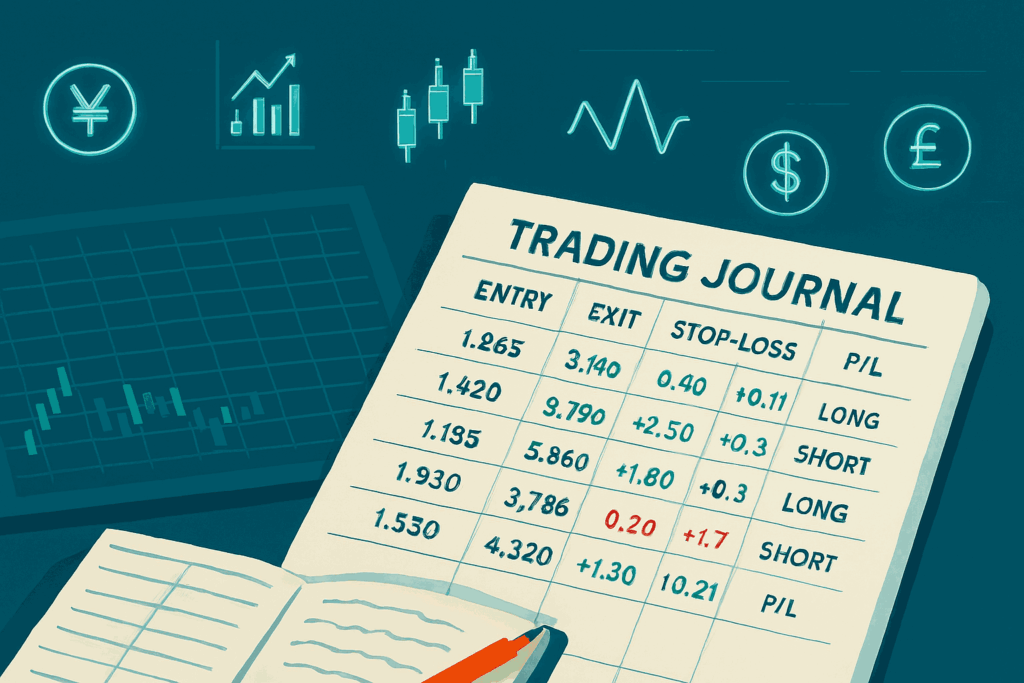
A signal log is a systematic record of all trades taken based on external signals. This includes not only entry and exit points but also critical details like trade size, stop-loss levels, risk-reward ratio, and any adjustments made during the trade. By logging trades daily, traders can create a clear record of how each signal performed and how their decisions impacted the outcome.
A comprehensive signal log typically includes:
- Signal source and type (technical, fundamental, or algorithmic)
- Entry and exit levels
- Stop-loss and take-profit levels
- Position size and leverage used
- Trade outcome (profit or loss)
- Observations about market conditions and reasoning behind any deviations
Why Keeping a Log Matters
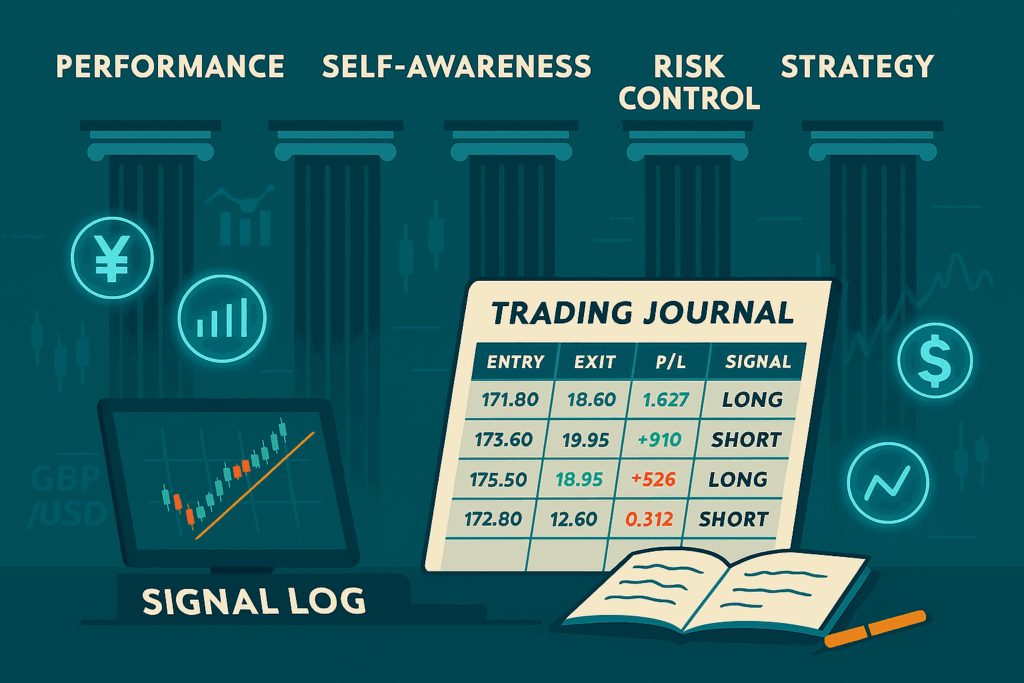
- Performance Analysis: Tracking all trades allows traders to see which signals consistently produce positive outcomes and which do not. Over time, this data helps in filtering out underperforming signal providers.
- Identifying Strengths and Weaknesses: A log highlights where a trader may deviate from recommended signals or mismanage risk. Recognizing these patterns is crucial for self-improvement.
- Risk Management: By reviewing past trades, traders can analyze the impact of stop-loss placement, position sizing, and risk-reward ratios. This enables better risk control for future trades.
- Accountability and Discipline: Maintaining a signal log encourages a structured trading approach. It reduces impulsive decisions, overtrading, and emotional reactions to wins or losses.
- Long-Term Strategy Refinement: A detailed record over weeks and months helps traders refine their overall approach. Insights from a signal log can inform adjustments to trading strategies, timing, and capital allocation.
Best Practices for Signal Logging
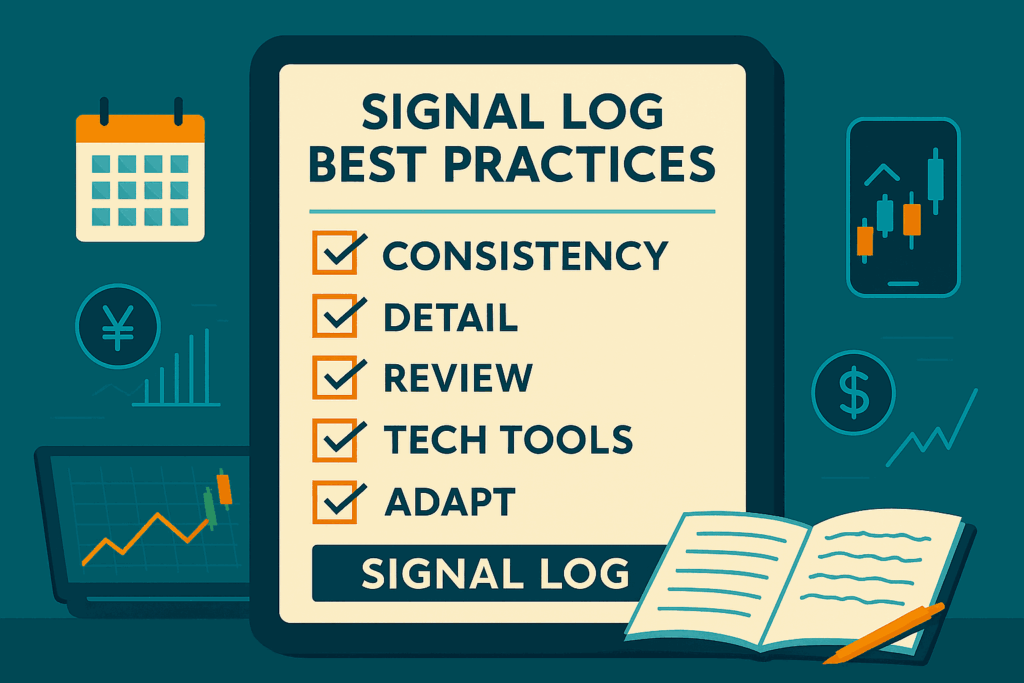
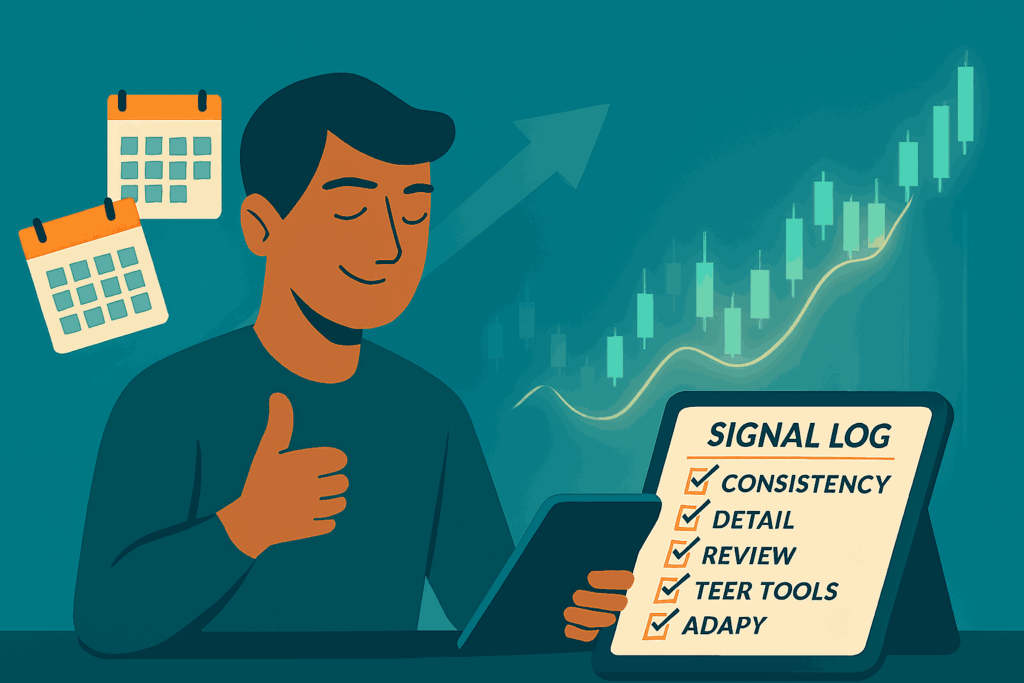
- Consistency: Record every trade, even if it seems insignificant. Incomplete logs provide an inaccurate picture.
- Detail: Include all relevant metrics and observations. Context is as important as numerical results.
- Review Regularly: Set aside time weekly or monthly to analyze patterns, profitability, and risk management effectiveness.
- Use Technology: Spreadsheet software, trading journals, or specialized apps can simplify logging and allow for better analysis.
- Adapt and Improve: Use insights from your log to adjust how you follow signals, manage risk, and allocate capital.
Conclusion
For traders aiming for long-term profitability with Forex signals, keeping a detailed signal log is indispensable. It transforms raw trading activity into actionable insights, providing clarity on what works, what doesn’t, and how to optimize performance. Beyond measuring profit and loss, a signal log promotes discipline, improves risk management, and empowers traders to make informed decisions. By consistently logging trades and reviewing performance, traders can turn signal-following into a structured, profitable, and sustainable approach.