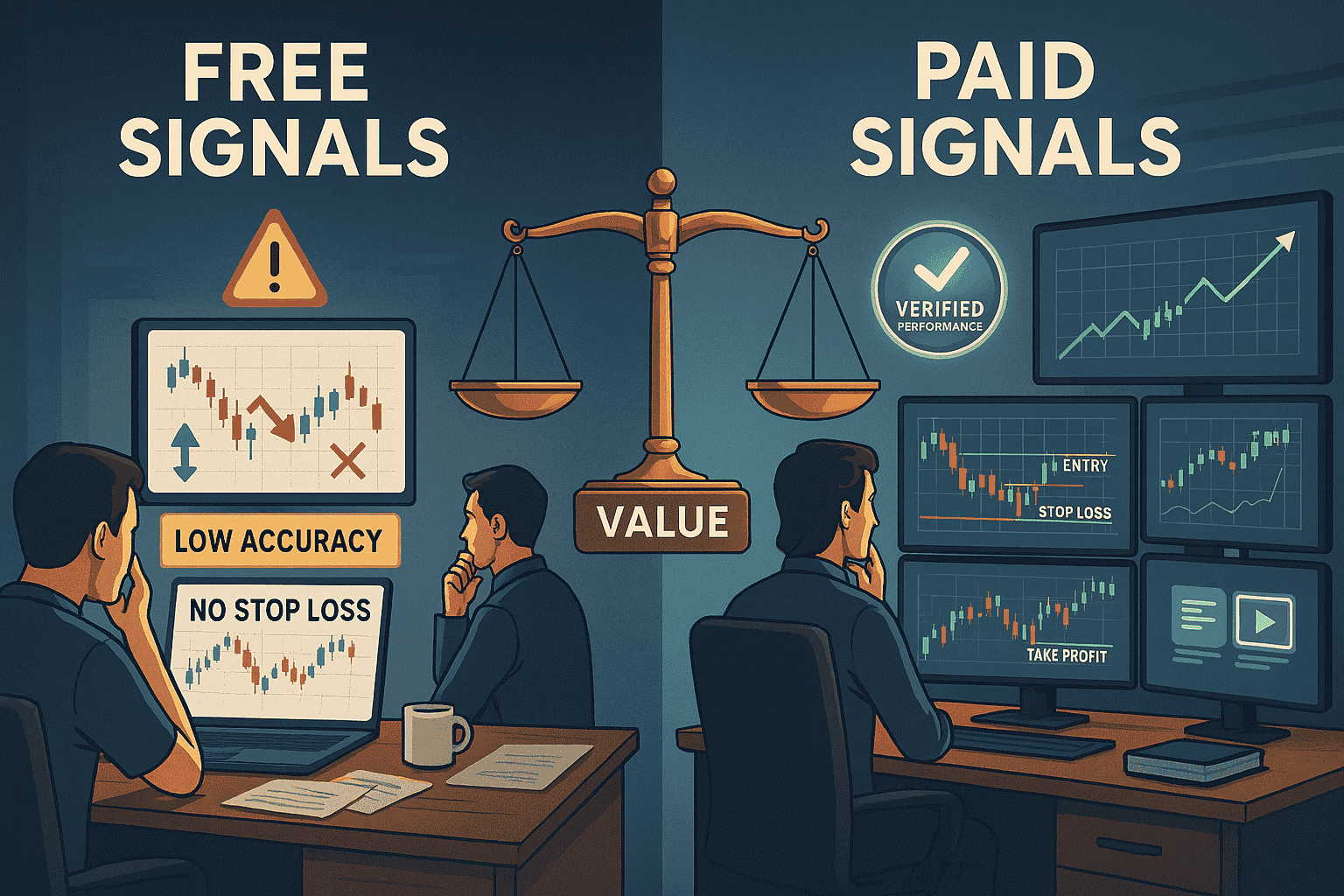
Forex signal services have become increasingly popular as traders seek to improve their results without spending hours analyzing charts. However, the choice between free and paid signal services is not always straightforward. Both options come with advantages and limitations, and the right choice depends on the trader’s goals, experience, and risk tolerance. This article compares free and paid Forex signal services to determine which delivers more value.
Free Signal Services
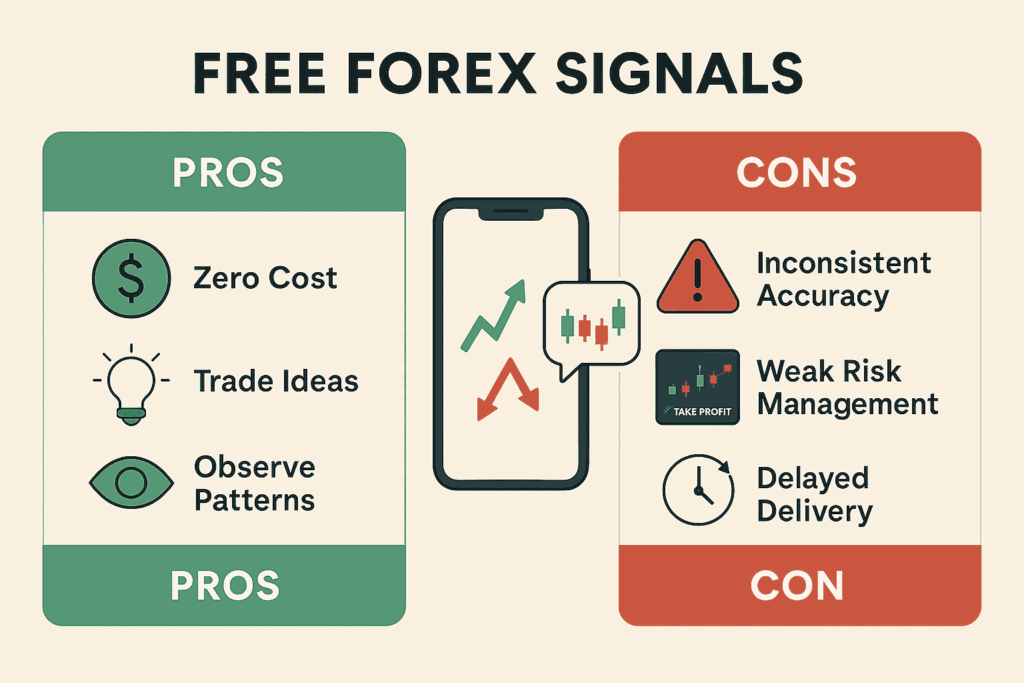
Free Forex signals can be an attractive option, especially for beginner traders or those exploring the market without financial commitment. These services are often offered by trading communities, educational websites, or brokers as a way to attract users. The main advantages include zero cost, access to trade ideas, and an opportunity to observe signal patterns before committing capital.
However, free signals come with notable limitations. Accuracy is often inconsistent, as these providers may not invest in thorough market analysis. Free signals sometimes lack proper risk management guidance, including stop-loss and take-profit instructions. Additionally, delivery methods may be slower or less reliable, which can result in missed opportunities in fast-moving markets. Traders relying solely on free signals risk developing poor trading habits if the rationale behind the signals is not explained.
Paid Signal Services
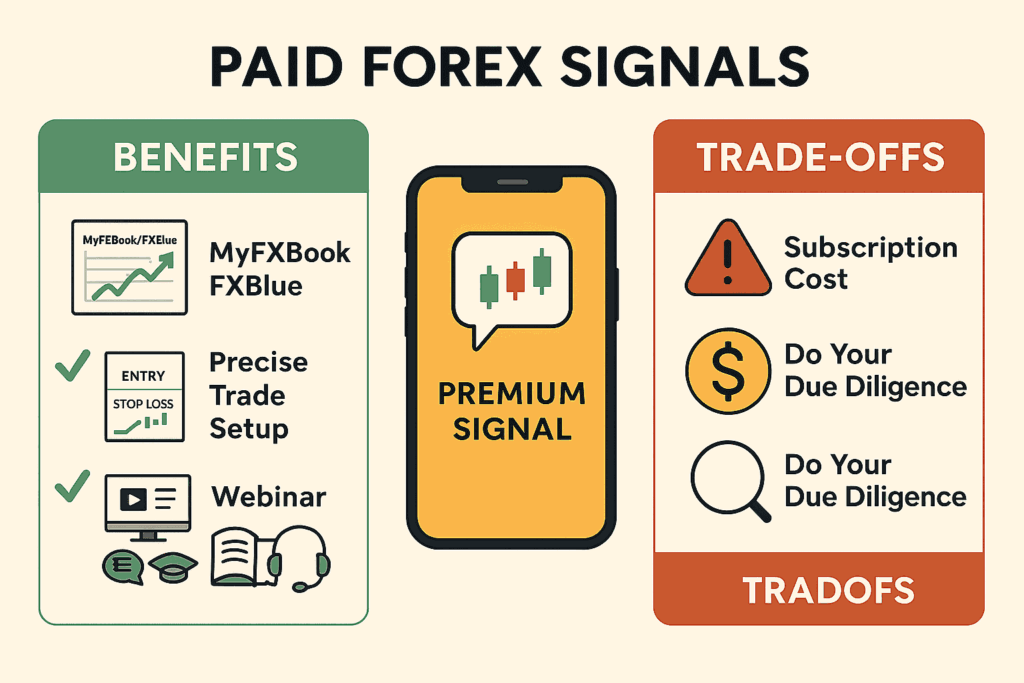
Paid Forex signal services generally promise higher accuracy, better research, and more structured support. These providers often have verified track records on platforms like MyFXBook or FXBlue, offering transparency into past performance. Paid signals typically include precise entry, exit, and risk parameters, helping traders manage positions more effectively. Many services also provide educational materials, webinars, or personalized support, adding value beyond the signals themselves.
The main trade-offs of paid services are cost and the need for due diligence. Some providers overstate performance or market experience to attract subscribers. Traders must carefully evaluate reviews, transparency, and risk management practices before subscribing. Despite the investment, the enhanced accuracy, timely alerts, and educational support often justify the cos t for serious traders seeking consistent results.
Comparing Value
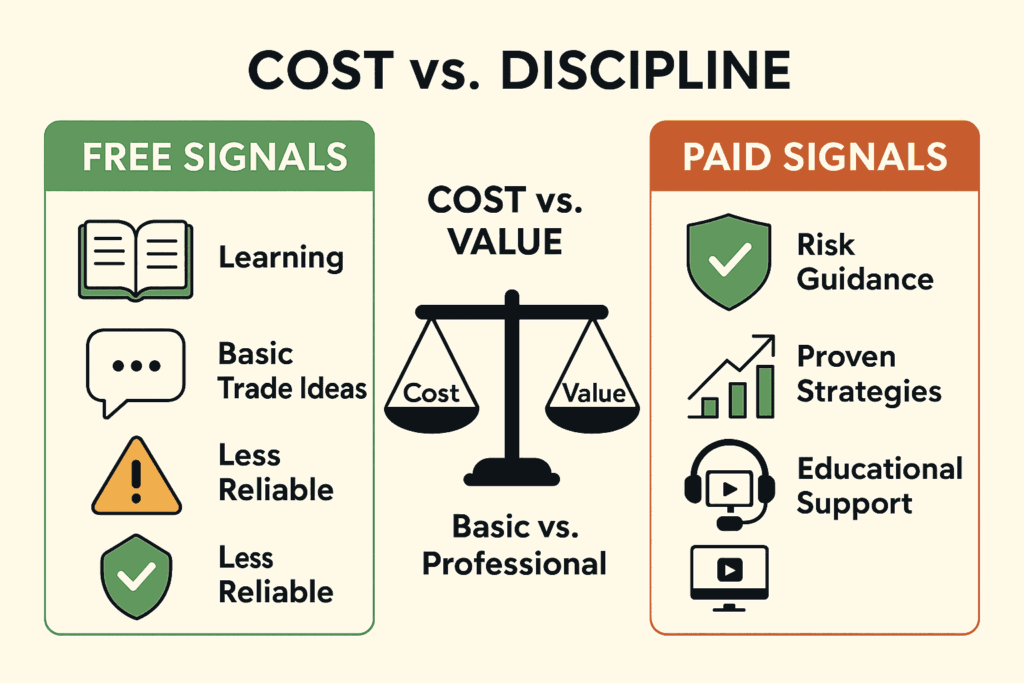
The value of a signal service depends on more than just price. Free services can offer learning opportunities and basic trade ideas but are less reliable for building a consistent trading edge. Paid services, when chosen carefully, provide structured signals, actionable risk guidance, and access to proven strategies, which can significantly improve trading discipline and long-term results.
For beginners, free signals can complement learning but should not be the sole source of trading decisions. Intermediate and advanced traders may benefit more from paid signals that offer transparency, accountability, and professional-grade market analysis. Ultimately, the combination of signal accuracy, delivery speed, risk management, and educational value determines which service delivers the most return on investment.
Final Verdict
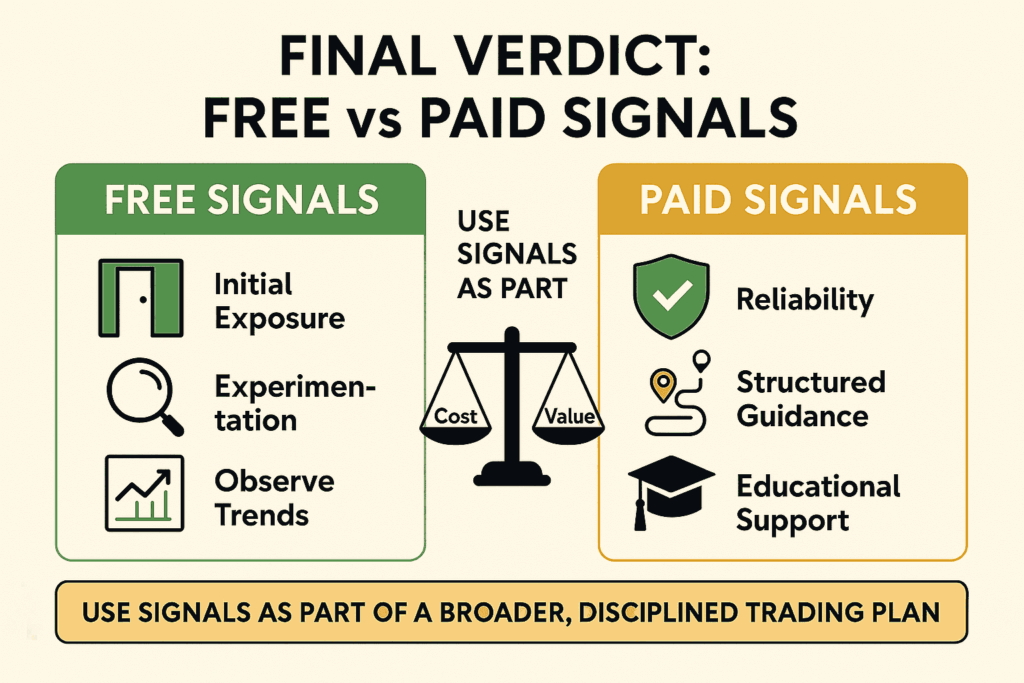
Both free and paid Forex signals have a place in a trader’s toolkit. Free services are suitable for initial exposure, experimentation, and observing market trends without financial risk. Paid services offer greater reliability, structured guidance, and education, making them better suited for traders aiming for consistent, actionable results. The key is understanding your objectives, evaluating providers critically, and using signals as part of a broader, disciplined trading plan.